
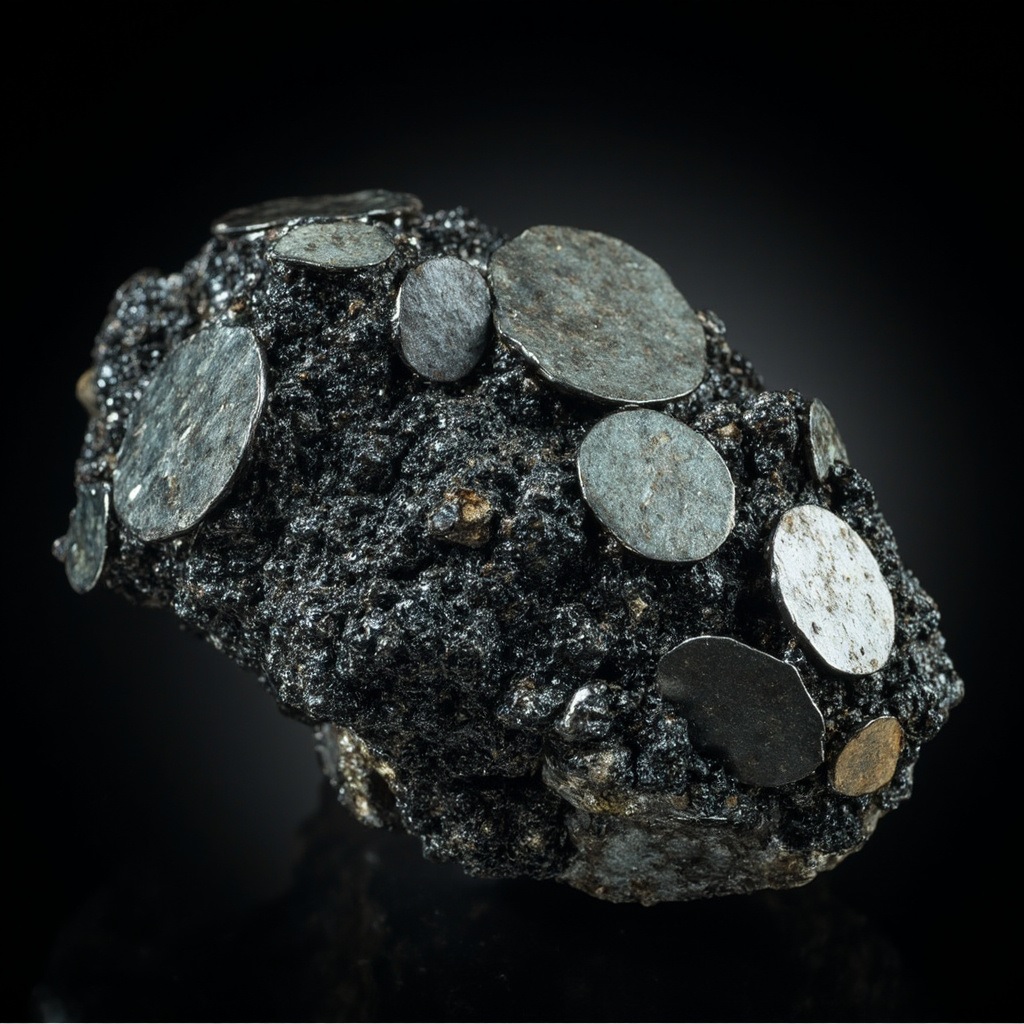
 The graphite market is not a monolith. It is a battlefield of rocks, and the winners are determined by what happens inside the earth millions of years before a single battery is ever assembled. If you are sourcing Flake Graphite for lithium-ion anodes, expandable foils, or refractory bricks, you cannot afford to treat all ore bodies as equal. The mineralogy is the difference between a premium product and a costly processing nightmare. Let us cut through the geological noise and look at what actually separates the world-class deposits from the also-rans.
Start with the crystalline structure. Chinese flake graphite from Heilongjiang and Inner Mongolia has long dominated the market due to sheer volume, but the quality is a mixed bag. The flakes are often fine to medium, with significant intergrowth of silicate minerals. This means you are buying a rock that requires aggressive flotation and multiple stages of grinding just to liberate the carbon. The cost of that energy and reagent consumption eats into your margin. Compare this to the massive flake deposits found in Mozambique and Tanzania. Here, the ore mineralogy is a gift. The flakes are coarse, sometimes exceeding 1 millimeter in diameter, with a high degree of crystallinity. The gangue minerals are simpler, often quartz and mica, which are easy to reject. The result is a higher yield of large, high-purity flakes with fewer processing steps. That is not just a quality advantage; it is a direct operational cost advantage.
Now, look at the impurity profile. A standard chemical assay tells you the total carbon content, but that is a vanity metric. The real question is: what is the remaining 5% or 10%? In many Brazilian deposits, the graphite is associated with high levels of iron sulfides and pyrite. Remove that pyrite, and you are looking at acid drainage issues and a product that struggles to meet the stringent purity standards for battery-grade spherical graphite. On the other hand, Canadian flake graphite from Quebec or Ontario often presents a mineralogy rich in graphite but low in sulfides and heavy metals. The carbon is well-ordered, meaning it graphitizes beautifully under heat treatment. For a buyer, this translates directly into a more stable electrochemical performance in an anode. The rock itself is doing half the purification work for you.
We must also discuss the elephant in the room: flake size distribution. The market pays a massive premium for large flakes, above 80 mesh or 180 microns. Why? Because large flakes are the foundation of expandable graphite for fire retardants and thermal management. In Sri Lanka, you get vein graphite, which is not technically flake but offers ultra-high purity. For true flake, however, the African deposits are currently the kings of size. The ore bodies in Madagascar and the previously mentioned Mozambique sites produce a distribution skewed heavily toward jumbo and large flakes. In contrast, many Chinese mines are increasingly producing finer flakes as the high-grade zones deplete. This is not a temporary trend; it is a geological reality. If your application demands large flake, your mineralogy analysis must prioritize deposits with a naturally coarse liberation size.
Finally, consider the consistency of the ore body. A single shipment of graphite might look good, but a mine with erratic mineralogy is a supply chain risk. Some Australian deposits show wild variations in carbon grade and flake size from one bench to the next. This forces the processor to constantly adjust their plant parameters. The best operations, like those in certain parts of Norway and the newer African mines, have remarkably homogeneous ore bodies. The mineralogy is predictable. The processing circuit is stable. The product quality is repeatable. In a world where battery manufacturers demand zero deviation in specifications, that geological stability is worth its weight in graphite.
So, when you conduct your global comparative analysis, stop looking at just the price per ton. Look at the rock. Look at the gangue. Look at the flake size curve. The mineralogy is the silent partner in your supply contract. Choose the wrong ore body, and you will fight the processing plant every single day. Choose the right one, and the graphite practically sells itself. The smart money is already moving toward deposits where the natural quality of the ore reduces the industrial burden. That is the only analysis that matters.