
Understanding Ink Viscosity In Flexographic Printing
Smooth ink flow is an essential part of efficient flexographic printing. Ink viscosity determines how easily the ink moves through the printing system and transfers onto the substrate. Maintaining an appropriate viscosity range helps support consistent coverage, sharp details, balanced color density, and reliable production performance. For practical guidance on different ink types and viscosity measurements, https://www.ketegroup.com/flexo-ink-viscosity-range/ provides useful information.
Flexographic inks are generally designed to flow efficiently through components such as the ink chamber, anilox roll, printing plate, and substrate. A suitable viscosity supports controlled ink transfer while helping maintain uniform printed results. Research also shows that flexographic inks commonly demonstrate shear-thinning behavior, meaning their apparent viscosity can decrease as shear increases during printing.
Temperature And Ink Flow
Temperature has an important influence on viscosity. As ink temperature rises, viscosity generally decreases, allowing the ink to flow more readily. A stable operating temperature therefore helps maintain predictable printing conditions. Temperature variations can significantly change viscosity measurements, making consistent temperature control valuable for repeatable results.
Important considerations include:
- Maintaining a consistent ink temperature during production
- Measuring viscosity under controlled conditions
- Monitoring temperature changes during long printing runs
- Adjusting process conditions according to the ink formulation
Shear Rate And Printing Speed
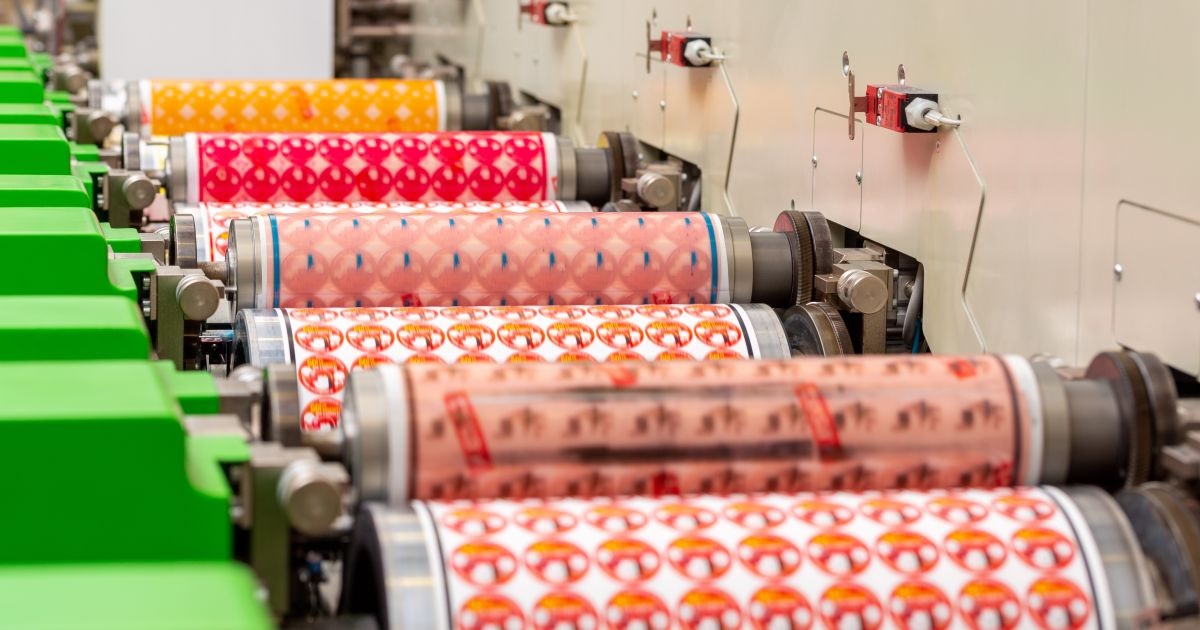
Printing speed affects the amount of shear experienced by the ink. Shear-thinning behavior can help ink move smoothly through the anilox cells and transfer efficiently between the anilox roll, plate, and substrate. Understanding how viscosity responds to changing shear rates allows operators to establish suitable production conditions.
Ink Composition And Solvent Balance
Pigments, binders, resins, additives, and liquid components all contribute to the flow characteristics of flexographic ink. During printing, solvent or water evaporation can increase solids concentration and cause viscosity to rise. Monitoring the ink condition and maintaining the intended formulation balance can support stable flow and consistent print quality.
Measurement Supports Consistent Results
Accurate viscosity measurement provides a practical foundation for controlling ink flow. Measurements should identify the cup or measurement method, temperature, and operating conditions so results can be compared reliably. Rather than treating viscosity as one universal number, printers can establish a repeatable operating window suited to the specific ink, substrate, anilox configuration, and press conditions.
Creating Efficient Printing Performance
Careful control of viscosity, temperature, shear conditions, and ink composition creates a strong foundation for smooth flexographic printing. By monitoring these factors systematically, printing operations can achieve dependable ink transfer, consistent appearance, efficient production, and high-quality results across a wide range of applications.